| Genre | First-person farming simulation |
| Platform | PC (Steam) |
| Core mechanic | Collecting, sorting, and selling eggs through a tray-and-vending-machine loop |
| Key elements | Chickens, ducks, geese, turkeys, feed and water containers, license system |
| Primary setting | A small starting farm that expands outward as new pens are unlocked |
| Structure | Continuous day-and-night progression through license tiers, not discrete levels |
Your First Morning on the Farm
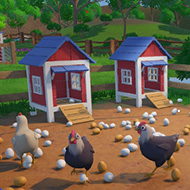
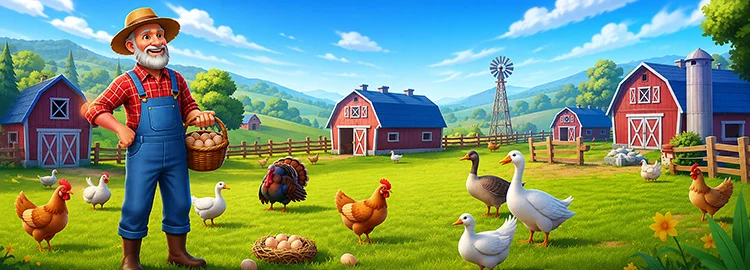
Every new save of Eggstreme Farming drops you into the same modest starting point: one pen, a handful of chickens, and a single vending machine that hasn’t seen a sale yet. The game doesn’t hide its early ceiling — you can’t buy a duck or expand a second pen until you’ve proven you can keep the first one running. That means your first real session is less about strategy and more about learning the physical layout of your own farm, since Eggstreme Farming is played entirely in first person, and distance genuinely costs you time.
The day-and-night cycle is quietly doing a lot of work here. Chickens don’t lay on command; they lay on their own schedule, so part of playing Eggstreme Farming well is learning to time your rounds so you’re not standing around waiting on a bird that isn’t ready yet. Early on, most players just wander pen to pen and hope for the best. By the second or third in-game day, the smarter move is building a loop: feed, check water, collect, repeat, with the vending machine as your last stop rather than your first.
- New players almost always overfeed on day one, wasting resources before they understand consumption rates.
- Standing next to a hen does nothing — she lays when she’s ready, not when you’re watching.
- The starting pen is deliberately too small to hold more than a few birds comfortably.
Turning Fresh Eggs Into Real Money
The part of Eggstreme Farming that surprises people who’ve played other farming games is the sales system. There’s no shopkeeper, no sell-from-inventory menu — eggs go into trays by hand, and trays have to be physically carried to a vending machine before they turn into cash. It sounds like a small detail, but it changes how you think about your farm’s layout. A pen built far from the nearest machine means every sale cycle eats extra walking time that could’ve gone toward refilling feed or checking on a sick bird instead.
This is where Eggstreme Farming quietly turns into a logistics puzzle. Once you’re running more than one pen, you start planning routes instead of just wandering, and tray capacity becomes something you actually think about instead of ignoring. Carry too few trays and you’re making unnecessary trips; overload yourself and collection slows down because you’re managing inventory instead of gathering eggs.
- Trays hold a limited number of eggs before they need to be emptied at a machine.
- Placing a second vending machine near a distant pen cuts down travel time significantly.
- Selling isn’t instant — the machine has to process each tray before the payout registers.
Feeding, Watering, and Nursing Sick Birds
Keeping animals alive and productive in Eggstreme Farming isn’t automatic once you buy them. Food and water containers run dry, and an empty container isn’t just an inconvenience — it directly slows egg production until it’s refilled. Feed quality also matters; cheaper feed keeps a bird alive, but better feed noticeably improves how consistently she lays, which is one of the first real economic decisions the game hands you.
Health adds another layer. A bird’s condition can dip, and when it does, Eggstreme Farming expects you to notice before it worsens, not after. That means administering medicine rather than letting an unhealthy animal keep producing on borrowed time. It’s a small system, but it rewards players who actually walk their pens instead of parking a hen and forgetting she exists.
- Water containers deplete faster than food containers during warmer stretches of the day-night cycle.
- Untreated health issues can stall an entire pen’s output, not just one bird.
- Higher-tier feed costs more upfront but pays for itself through steadier laying.
Chickens, Ducks, Geese, and Turkeys Each Play Differently
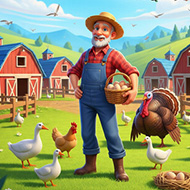
Once your license lets you branch out beyond chickens, Eggstreme Farming stops being one repeating loop and starts asking you to juggle several. Ducks, geese, and turkeys each come with their own needs, and lumping them into the same pen setup as your chickens is a common early mistake. The game doesn’t spell out the differences loudly, so a lot of players learn them the slow way, through a pen that just isn’t performing the way they expected.
This is also where community vocabulary starts showing up in discussions of Eggstreme Farming — players talk about “mixed pens” versus “specialist pens,” and there’s genuine debate about which approach scales better once you’re managing four species at once. Neither side is objectively wrong; it depends on how much walking time you’re willing to trade for variety.
- Geese and turkeys generally need more space per bird than chickens or ducks.
- Mixed-species pens are easier to manage early but harder to optimize later.
- Specialist pens reward players willing to build multiple smaller enclosures instead of one large one.
Licenses, XP, and the Slow Climb to a Bigger Farm
Progression in Eggstreme Farming runs through a license system fed by experience points. You earn XP from daily tasks — collecting a set number of eggs, selling a certain number of trays, keeping animals fed and medicated — and that XP unlocks new licenses that open the door to bigger pens, new species, and additional equipment. It’s a slower curve than a lot of similar games, and that pacing is genuinely one of the more debated parts of the experience.
Some players in the Eggstreme Farming community describe the early license grind as meditative, a game that rewards patience rather than speed. Others find the early hours thin, arguing there’s not enough to actively do while waiting on birds to lay and licenses to fill. Both reactions are fair, and it’s worth going in expecting a farm sim that leans deliberately slow rather than one built around constant action.
- Daily tasks reset each in-game day, so missed objectives don’t carry over.
- Higher licenses unlock access to species beyond chickens.
- XP gain is tied directly to completing tasks, not simply playing longer.
Controls Inside Eggstreme Farming
Because everything in Eggstreme Farming happens in first person, controls matter more than they would in a top-down farming game. Movement is handled with WASD, camera and aim with the mouse, and interaction — picking up eggs, refilling containers, administering medicine, placing trays — is mapped to the left mouse button or a dedicated interact key depending on context. Inventory and tray management are typically pulled up with a separate key so you’re not fumbling through menus mid-collection.
- WASD handles all farm movement, including navigating between pens.
- The mouse controls both camera direction and most direct interactions with animals and equipment.
- A dedicated interact input covers refilling containers, collecting eggs, and administering medicine.
- Trays and inventory are accessed through their own separate control, kept apart from movement.
A Farm With One Mode, But Many Moving Parts
Eggstreme Farming doesn’t split into separate game modes the way some titles do — there’s no arcade mode or timed challenge sitting apart from the main farm. Instead, the entire game is one continuous session structure: you start with a single pen and a handful of chickens, and everything else, from ducks to geese to turkeys, unlocks progressively inside that same ongoing save rather than through a mode select screen.
What changes over the course of that single session is complexity, not context. Early sessions are almost entirely about the chicken-and-vending-machine loop described earlier. Mid-game sessions start layering in multiple species, medicine management, and route planning between several vending machines. By the time a farm is fully expanded, a single day-and-night cycle in Eggstreme Farming can involve juggling four species, multiple pens, and a sales route that no longer resembles the simple loop you started with.
What New Players Get Wrong Early
The single most common beginner mistake in Eggstreme Farming is treating it like a game you actively play every second rather than one you check in on rhythmically. Standing and staring at a chicken doesn’t make her lay faster, and players who try to force the pace usually end up frustrated rather than efficient. The better approach is building a route and letting the day-night cycle do its work while you handle other pens.
The second mistake is over-expanding. Buying a second pen before your first is stable — feed running low, water topped up, trays getting to the machine on time — just means two struggling pens instead of one solid one. Eggstreme Farming rewards patience over ambition in its opening hours, and the license system is built specifically to slow that impulse down.
Common Questions About Eggstreme Farming
How do you sell eggs in Eggstreme Farming?
Eggs have to be collected into trays by hand and then physically carried to a vending machine, which processes each tray before converting it into money. There’s no direct sell-from-inventory option, which is why machine placement relative to your pens matters so much.
Can you play Eggstreme Farming with more than chickens from the start?
No. Ducks, geese, and turkeys unlock later through the license system, which is tied to XP earned from daily tasks like collecting eggs and selling trays. Every farm begins with chickens only.
Why do my birds stop laying eggs in Eggstreme Farming?
Laying slows or stops when food or water containers run dry, feed quality is too low, or a bird’s health has dipped and gone untreated. Refilling containers and administering medicine promptly usually resolves it.
By the time your farm in Eggstreme Farming has four species, a handful of pens, and two vending machines instead of one, that first quiet morning with a single hen and an empty tray feels like a different game entirely. It’s still built on the same small chores — feed, water, collect, carry, sell — but the scale changes what those chores demand from you, and that slow-building weight is exactly what Eggstreme Farming is designed around.