

Chicken Merge

Chicky Farm

Grow Up The Cats

MECCHA CHAMELEON
PetBox: Ultimate Desktop Pet
Deer Simulator
Eggstreme Farming













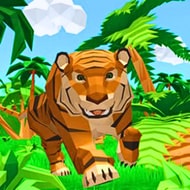




You spot a panther pacing near the tree line in Tiger Simulator 3D, and committing to the hunt means everything else — your energy, the family waiting back at your territory, the coins you’re saving for the next upgrade — has to wait until the chase is over.
The habitat isn’t uniform — panthers and elephants show up as genuine threats or targets depending on your level, while snails are scattered around as an easier, lower-stakes source of meat. Early on, most of a session is spent working out which of these are worth engaging and which are better left alone until your tiger’s attack stat is higher.
Meat gathered from these hunts feeds your family directly, so the hunting loop and the family loop are never really separate systems — one funds the other constantly.
Once your tiger has leveled up enough, you can find another tiger and start a family, and the game caps that family at four cubs once you’ve reached the right level. Cubs aren’t cosmetic — they can be fed, trained, and eventually brought into combat and hunting alongside the parent tiger, so a neglected family is a weaker one in a fight.
Feeding and training every cub individually is one of the slower parts of the loop, and it’s the part players most often mention losing track of once they have a full family of four.
Coins earned from quests and hunting go toward changing how your tiger and its family actually look, from full skin sets down to hats layered on top. Customization extends to your mate and cubs as well, not just the tiger you started with, which is part of why players keep grinding coins well after the main quests stop being a challenge.
Experience from quests and hunting converts into points, which get spent on attack, energy, or life — the three stats that determine how a tiger performs in a fight and how long it can keep sprinting before it needs to rest. Beyond the three main stats, special skills unlock bonuses tied to speed, food collection, and resource gathering, letting a build lean into faster hunting instead of just raw combat power.
Most beginners dump points into attack first and regret it the first time they run out of energy mid-chase, which is one of the more common ways an early session of the game goes sideways.
Not every quest is about hunting. Some send you looking for ancient artifacts scattered through the habitat, and others are pure flavor — launching fireworks rather than chasing anything down. That mix keeps the quest log from feeling like a straight combat checklist, which matters since so much of the game otherwise revolves around hunting.
Reaching further into the map opens new regions, and some of those are gated behind boss battles rather than just a level requirement. These fights ask more of a tiger’s stats than a regular hunt does, which is where the earlier decision to balance attack against energy and life actually gets tested.
Players who treat the early game as a warm-up rather than the whole experience tend to have an easier time here, since a tiger built only around chasing snails struggles once a boss fight demands sustained energy and higher life.
Tiger Simulator 3D holds together because the systems all feed each other — meat from hunting panthers and elephants pays for the family, coins from quests like the ancient artifact hunts pay for skins and hats, and the points from all of it decide whether a boss battle in a new region goes well or ends the run early. Reaching a family of four cubs, in particular, still holds up as the moment the game stops being about one tiger and starts being about all of them.