
Chicken Merge

Chicky Farm

Grow Up The Cats

MECCHA CHAMELEON
PetBox: Ultimate Desktop Pet

Deer Simulator
Eggstreme Farming








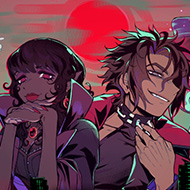




You click into Burn the Midnight Oil expecting something quick and instead land in a wall of text that refuses to be skimmed. A character sprite stands against a static background, a line of dialogue types itself out at the bottom of the screen, and the only way forward is to read it, click, and read the next line. There’s no health bar, no timer, and no score counter anywhere on screen — just the steady rhythm of text, portrait, and the occasional pause where the game hands control back to you.
The interface will feel immediately familiar if you’ve spent any time with visual novels: a dialogue box anchored to the bottom third of the screen, a name tag identifying who’s speaking, and a small log button tucked into the corner for scrolling back through lines you clicked past too fast. Burn the Midnight Oil leans entirely on this format rather than mixing in action sequences or puzzle interludes. Progress happens one line at a time, and the game trusts the player to actually absorb what’s being said rather than mashing through to the next choice.
That trust is really the whole pitch. Nothing forces you to slow down mechanically — there’s no penalty for clicking too fast — but skipping ahead means arriving at a choice prompt with no idea what you’re actually choosing between. Players who treat this like a normal browser game and rush the text end up backtracking through the log more than they would if they’d just read carefully the first time.
Save and load menus sit where you’d expect them, accessible mid-scene without breaking the flow, which matters more than it sounds like in a game built entirely around dialogue. Being able to duck out, save, and come back to the exact same line later is what makes a text-heavy format like this workable in short sessions instead of demanding one long sitting.
Periodically the flow of dialogue stops and hands the player a set of response options instead of another line to click through. These aren’t puzzle gates or skill checks — they’re narrative branches, the kind of choice that changes what gets said next rather than whether you can continue at all. That distinction matters for how the game plays: there’s no way to lose a conversation, only different versions of it.
The choice points also reset the reading rhythm. After several screens of passive clicking, having to actually stop and pick an option breaks the momentum in a way that keeps the format from feeling like pure autopilot. It’s a small mechanical touch, but it’s doing a lot of the work in keeping a dialogue-only format from going stale over a longer session.
Burn the Midnight Oil isn’t built for players looking for reflexes or mechanical depth — it’s built for people willing to sit with a dialogue box and let a scene play out at its own pace. If that’s the kind of pacing you’re looking for, the format holds up; if you’re the type to click through text without reading it, this one will lose you fast.