

Chicken Merge

Chicky Farm

Grow Up The Cats

MECCHA CHAMELEON
PetBox: Ultimate Desktop Pet

Deer Simulator

Eggstreme Farming


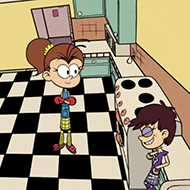








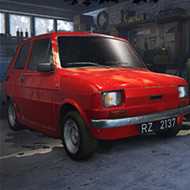







Baldi’s Basics Iceberg sounds like it should be a layered breakdown of hidden lore and deep-cut trivia, but what actually loads is a full schoolhouse — hallways, a principal’s office, a museum, and a notebook counter ticking upward while footsteps get louder somewhere behind you. This is a fan-built expansion of the original notebook-collecting formula, and it plays less like a tidy remaster and more like someone kept adding rooms, rules, and characters until the school barely resembled where it started.
The core loop hasn’t changed from the formula this expansion is built on: walk the halls, open classroom doors, and collect notebooks while solving whatever’s inside them. Answer a problem wrong and Baldi comes looking for you, ruler in hand, and getting caught means losing progress on that run. The school also enforces its own posted rules — breaking one, like running when you’re not supposed to, draws unwanted attention fast.
What’s different here is scale. Notebooks aren’t the only thing worth tracking anymore; multi-level maps add a principal’s office, a museum, and dedicated boss fight areas that don’t exist in the base game’s floors, so early exploration takes noticeably longer just to learn the layout.
New floor textures and structures — rotating halls, fountains, merry-go-rounds — mean two playthroughs on different floor sets can look and feel like different buildings entirely.
Baldi is still the constant threat, but he’s no longer working alone. The Ultimate Edition folds in a long list of NPCs pulled from earlier mod builds, including Clocker, King Of Doors, Tomnado, and Playtime, alongside classroom regulars like 1st Prize, Arts and Crafters, Gotta Sweep, and Mrs. Pomp. Each one has its own behavior pattern, so learning who chases, who blocks, and who’s just background noise becomes its own early skill separate from solving notebook problems.
Adventure Mode is the most straightforward entry point — five floors of increasing size, character count, and difficulty, meant to be played roughly in order. Random Mode instead pulls one floor out of a rotating set of three each time you start, so no two sessions open the same way. Infinite Mode drops the structure entirely and just asks how many notebooks you can collect before something catches you.
Ultimate Mode is the one players bring up most when comparing this to the base game: eighteen notebooks, spread across a giant school, with eleven other characters loose on the floor at the same time as Baldi. Items get harder to find and random events start firing more often, which is exactly why players who’ve cleared Adventure Mode a few times treat Ultimate Mode as the real test.
Beyond the built-in modes, a Floor Builder lets players lay out their own school floors from scratch, and a Floor Browser lets everyone else download and try what other players made — including community sets like Haroon’s Map Pack, an extreme-difficulty layout built around 309 notebooks with no character interference at all, closer to a puzzle run than a horror chase. That map alone shows how far this expansion has drifted from tighter, shorter base-game floors, and it’s a point some players push back on — the sprawl that makes Ultimate Mode and custom floors possible also means early sessions take longer to feel manageable.
Yes — the core perspective hasn’t changed. You’re still collecting notebooks and avoiding Baldi’s ruler, just across a much larger school with more NPCs working against you.
Ultimate Mode raises the notebook count to eighteen, spreads them across a giant school, and puts eleven other characters on the floor alongside Baldi, with items that are deliberately harder to locate.
Yes, through the Floor Builder, and finished floors can be shared and downloaded through the Floor Browser, which is how community layouts like Haroon’s Map Pack ended up in circulation.
Baldi’s Basics Iceberg ends up being less about any single scary moment and more about how much bigger the school keeps getting — between Ultimate Mode’s eighteen notebooks and custom floors like Haroon’s Map Pack, there’s a lot more schoolhouse here than the notebook-and-ruler loop it started from.