
Chicken Merge

Chicky Farm

Grow Up The Cats

MECCHA CHAMELEON

PetBox: Ultimate Desktop Pet

Deer Simulator
Eggstreme Farming




















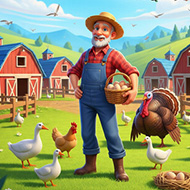
You start Eggstreme Farming with a handful of chickens, a couple of feed troughs, and a vending machine that hasn’t sold a single tray yet. Everything that happens after that — the ducks you add once the coop budget allows it, the geese pen you eventually rent next door, the turkeys that show up once you’ve proven you can keep the first three species healthy — grows out of that starting point rather than being handed to you.
Eggstreme Farming is built around four animal types: chickens, ducks, geese, and turkeys. Each species comes with its own pen requirements and its own rhythm of feeding, watering, and health upkeep, so a routine that keeps a chicken coop running smoothly can fall apart the moment geese are added without adjusting it.
Animal care goes beyond topping off a bowl. Food and water containers come in different quality levels, and animals that are neglected or fall ill need medicine or vaccines rather than just a refill. Letting that upkeep slide is the fastest way to watch a pen’s output quietly drop without an obvious warning.
Expansion works through renting new pens, which pulls directly from the same budget covering the farm’s utility bills, so growth is a constant trade-off between more animals and staying solvent. A save bug some players have run into is worth knowing about going in: an animal’s color variant, like a golden duck, can revert to its default white appearance between sessions.
Eggs in Eggstreme Farming aren’t sold one at a time. You gather them by hand into trays, then carry those trays over to a vending machine to actually cash them in, which turns the collection loop into a small logistics routine rather than a single click-and-done action.
It’s also the part of the game that community feedback singles out most. With dozens of animals producing at once, gathering every egg individually adds up to what players have described as “a hundred clicks” per round, and requests for a bulk collect-all option come up often in discussions about the demo.
A purchasable egg collector exists to cut down on the manual work, though its placement and activation have confused enough players that it’s worth experimenting with early rather than assuming it works automatically the moment it’s bought.
Progress runs on a license system tied to experience points. Completing daily tasks — collecting eggs, selling full trays, keeping animals fed and healthy — earns XP that unlocks new licenses, and those licenses are what actually let you expand into new pens or take on additional animals.
Running alongside that progression is a day-and-night cycle, plus recurring bills for water, electricity, and internet that keep the farm’s finances from ever fully settling. It plays less like a one-time unlock system and more like a loop that has to keep being fed.
Reception to all of this has been genuinely mixed. Players generally like the underlying management loop, but the manual, click-heavy egg collection, save issues like the golden duck reverting to white, and inconsistent Chinese-language localization are the complaints that come up most.
Chickens, ducks, geese, and turkeys are the four species currently in the game, each with distinct pen setups and care needs rather than being reskins of one another.
Eggs are collected into trays by hand and carried to a vending machine, which is where the sale happens — there’s no direct sell-from-inventory shortcut built in.
A demo is currently available ahead of the full release, and feedback from it — including complaints about repetitive clicking and the save issue with animal color variants — has already led to visible updates.
Eggstreme Farming is a PC farming simulator, so there’s no playable build embedded on this page — the demo is a separate download ahead of the full release. What it offers, once you’re past the first few chickens, is a genuinely layered loop of trays, licenses, and bills, with the golden duck variant bug serving as a fair reminder that it’s still very much a work in progress.