


Chicken Merge

Chicky Farm

Grow Up The Cats

MECCHA CHAMELEON

PetBox: Ultimate Desktop Pet

Deer Simulator

Eggstreme Farming










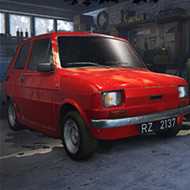








What actually happens when you pop the hood on a car that barely runs and start pulling parts instead of just reading a repair manual? Cheap Car Repair answers that by putting you inside a small workshop with a car that needs real, hands-on attention rather than a menu of pre-set fixes. There is no dialogue explaining every step — you look at what’s broken, decide what to replace, and find out whether the fix actually works once the engine turns over.
Cheap Car Repair puts the player in a first-person view inside a small garage, standing in front of a car that needs work. The current build offers two vehicles to work on, and each one comes with its own set of problems to diagnose and fix rather than a single scripted repair job repeated twice. Parts come apart and go back together by hand, and the game leans on that physical, piece-by-piece process instead of abstracting repairs into a progress bar.
The garage itself doubles as the only real interface — there’s no separate menu screen pulling the view away from the car to make decisions. Whatever gets fixed, painted, or swapped happens right there at the vehicle, which keeps Cheap Car Repair feeling closer to actual shop work than to a management sim.
Repair work in Cheap Car Repair covers the basics of getting a car back into working order, but the game does not stop at function. Once a car actually runs, custom paint options let players change its look entirely, turning a repair job into something closer to a personal build. That combination — fix it, then make it yours — is a big part of why players stick around after the first car is running.
Parts for both repairs and upgrades come from an in-game shop rather than appearing automatically as rewards. Buying the right part for the right problem is part of the challenge, since a part that fixes one issue on the car will not necessarily improve performance on its own.
Cheap Car Repair does not let a repair job end at the workshop door. Once parts are installed and paint is applied, the car gets tested on a dedicated circuit, which is where sloppy repair choices actually show up. A part that looked fine sitting in the garage can behave very differently once the car is pushed on the track, and that circuit test is the real check on whether a repair in Cheap Car Repair was done correctly or just done quickly.
This loop of repairing, customizing, and testing is what gives Cheap Car Repair its shape. Players who enjoy tinkering get the workshop half of the experience, while players who want a payoff for their work get to see it on the circuit immediately after.
Cheap Car Repair works because it never separates the fixing from the driving — every part swapped in the garage eventually has to prove itself on the circuit, and that back-and-forth between workshop and track is what keeps a two-car lineup from feeling thin. Whether the goal is a clean repair or a repainted car that finally runs the way it should, the circuit is where Cheap Car Repair settles the question.